

A professor in 海角社区app鈥檚 School of Social Work听will help lead a new national research network exploring how the relationships between people and animals can strengthen health, resilience and community well-being.
Dr. Haorui Wu, Canada Research Chair (Tier II) in Resilience, is a co-director on a new $2.5-million Social Sciences and Humanities Research Council (SSHRC) Partnership Grant, Establishing a Network for Human-Animal Connections Research and Collaboration.
Led by principal investigator Dr. Colleen Dell of the University of Saskatchewan, the five-year initiative (2026鈥�2031) will bring together researchers, community organizations and knowledge users from across the country to advance research on the connections between people and animals.
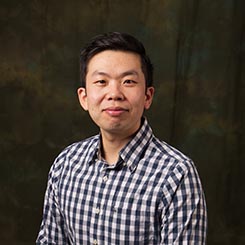 It鈥檚 the kind of national, cross-disciplinary effort that hasn鈥檛 existed in Canada before, says Dr. Wu (shown left).听
鈥淭his is the first research of this kind conducted in Canada,鈥� says Dr. Wu. 鈥淒ifferent disciplines have their own disciplinary-focused approach. For example, psychology looks at how human-animal interactions support people鈥檚 psychological health, but we don鈥檛 have an interdisciplinary or multidisciplinary team working together on this. We鈥檝e built a team with scholars from social science, health science and natural science, and we work together and apply our knowledge so we can move the research forward. That is just one exciting aspect of this research.鈥�
The network鈥檚 guiding framework 鈥� One Health Social Science 鈥� treats people, animals and their shared environment as inseparable contributors to health and well-being.
鈥淏ased on the One Health definition, humans, animals and their surrounding environment are all connected, and they all contribute to health and well-being,鈥� says Dr. Wu. 鈥淢ost research on assistance animals only talks about the benefits animals bring to human beings, but it never considers that animals are our co-inhabitants on this earth. We also need to think about their welfare. That鈥檚 a social justice issue as well.鈥�
Moving to a multispecies approach
Human-animal interaction is a broad field, spanning companion animals, agricultural animals, zoo animals, laboratory animals and wildlife. The new network is organized into five research streams. Dr. Wu co-leads the network鈥檚 Social Capital stream alongside Dr. Dell, with a focus on companion animals and service animals in the context of disaster and community resilience 鈥� an extension of his long-standing research into resilience, climate change and environmental justice.
Research shows that many people are reluctant to evacuate during emergencies if they can鈥檛 bring their pets with them, creating risk for both people and animals.
Every time there is an evacuation order, a lot of people refuse to leave because they don鈥檛 want to be separated from their pets.
鈥淓very time there is an evacuation order, a lot of people refuse to leave because they don鈥檛 want to be separated from their pets,鈥� says Dr. Wu. 鈥淭hat is a major issue because our disaster response systems need to switch from the human-centric approach to a multispecies approach to support people and their pets together. We need more animal-friendly facilities to support them.鈥�
The same dynamic, he notes, plays out in other kinds of crisis: people fleeing domestic violence situations sometimes delay leaving because a shelter won鈥檛 accept their pet. Dr. Wu is separately leading a postdoctoral project on animal-friendly housing in Nova Scotia that examines how the province鈥檚 housing crisis has made it harder for people with pets to find a place to live.
Putting knowledge to work
Just as important to Dr. Wu as the research itself is what happens to it afterward.
鈥淲e don鈥檛 want the research just to be published as papers,鈥� says Dr. Wu. 鈥淲e really hope the research knowledge can be translated into community-based strategies to support people.鈥�
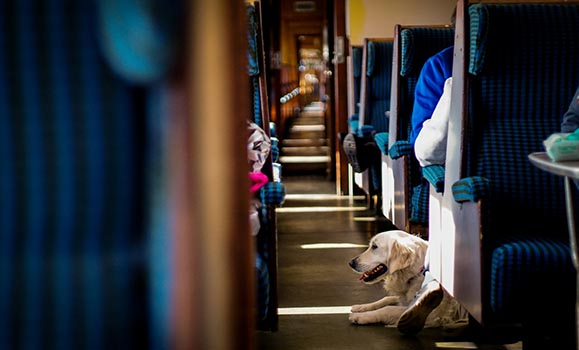
听(John Crozier photo/Unsplash)
The network鈥檚 partners include SPCAs and humane societies, veterinary clinics, and social service organizations, who help identify the field鈥檚 most urgent needs and receive research findings back to inform their programs.
鈥淩eal research should make a real, community-based impact,鈥� he says. 鈥淎nd eventually, we would like to change policy, see how policy can really support these things.鈥�
Five research streams
The network鈥檚 work is organized into five streams, each pairing academic leads with community and clinical partners from across the country:
- Social Capital led by Drs. Wu & Dell, in partnership with Community Veterinary Outreach; the Saskatchewan Provincial Association of Transition Houses and Services; the Saskatchewan SPCA; St. John Ambulance Saskatchewan.
- Wellbeing led by Williamson & Binfet, in partnership with the Canadian Centre on Substance Use and Addiction; B.A.R.K.; PAWS Your Stress.
- Social Systems led by Gillett & Grant, in partnership with the Mayo Clinic; Waypoint; the Royal Canadian Mounted Police; Correctional Service Canada.
- Wholism led by McGinnis (Snowshoe) & Woodsworth, in partnership with the Muscowpetung Saulteaux Nation; Meadow Lake Tribal Council; the Native American Humane Society; Save REZ Dogs; Equine Institute International.
- Ethics led by Chalmers & Carver, in partnership with AUDEMUS Service Dogs; the Atlas Institute; St. John Ambulance Canada.
Looing ahead
The partnership advances interdisciplinary, community-engaged research while creating new learning opportunities for 海角社区app students through multidisciplinary collaboration and broader perspectives on health at both individual and community levels.
鈥淲hen we talk about health, we use an expanded approach that doesn鈥檛 only focus on human beings, but also on our co-inhabitants, the animals, and the environment around us,鈥� says Dr. Wu.
Over the network鈥檚 five-year mandate, Dr. Wu hopes the work will build public understanding of the benefits of human-animal relationships at the grassroots level, strengthen collaboration between researchers and community-based practitioners, and ultimately generate the kind of evidence that can inform policy.
For 海角社区app and its Faculty of Health, the partnership offers a chance to help shape a distinctly Canadian, interdisciplinary approach to a question that touches nearly every community: how the bond between people and animals can make both healthier and more resilient.