

Four 海角社区app researchers are set to embark on the next chapter of their scholarly careers with strong momentum behind them as Killam Memorial Chairs.鈥�
Killam Chairs are awarded to academics of the highest distinction and carry substantial funding and trainee support, offering an opportunity for recipients to push their research programs to new heights.鈥�
Dal's newest Killam Memorial Chairs are advancing research in treating lung disease, promoting inclusive play for disabled children, reparatory justice, and smart nanoengineering for next-generation sustainable agriculture solutions.聽
Dal is one of just five Canadian universities that receives funding from the Killam Trusts, established out of the nearly $100-million estate of Dorothy Killam. Dal's portion of the Trusts was built on a $30-million gift from the estate and helps fund the Memorial Chairs as well as other academic awards.
鈥淢rs. Killam鈥檚 gift has an important and unique significance to the 海角社区app community,"聽says Graham Gagnon, Dal's vice-president research and innovation. "The funding support through the Killam Trusts recognizes Dal researchers of the highest distinction whose work advances knowledge and delivers lasting benefit to society.
"The Killam Chairs provide sustained support for ambitious research and the training of future scholars, enabling work that pushes boundaries and creates lasting impact.鈥澛犅�
Get to know the Dal's new Killam Memorial Chairs:
Dr. Sanja Stanojevic, Faculty of Medicine
Established Research Leader聽聽
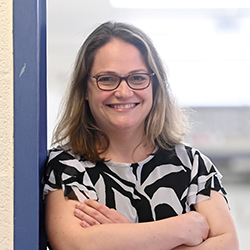 Dr. Sanja Stanojevic is an Associate Professor in the Department of Community Health and Epidemiology and an internationally recognized leader in lung health research. A leading respiratory epidemiologist, her work is reshaping how lung disease is diagnosed and managed across the lifespan. Her research explores how lungs grow and age, and how environmental and social exposures influence disease 鈥� always with the goal of helping people get earlier, more accurate diagnoses and better care.聽聽
A defining contribution of her career is the development of lung function growth charts, now used around the world to interpret lung function measurements. By tracking how lungs change over the lifespan, these tools allow clinicians to detect early signs of disease to intervene sooner. More broadly, her work has transformed how lung function is measured and interpreted in both research and clinical practice.聽聽
Dr. Stanojevic is also a respected leader and collaborator, holding key roles in international research networks and leading efforts that have shaped global standards in respiratory care. She has championed more equitable approaches to diagnosis, including removing race-based algorithms for interpreting lung function.聽 聽
Dr. Chevy Eugene, Faculty of Arts & Social Sciences
Early Career Researcher聽
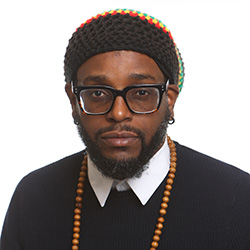 Dr. Chevy Eugene is an assistant professor cross appointed in the Black and African Diaspora Studies (BAFD) Program and the Department of Political Science. He was recognized by the Pan-African Council as one of the Most Influential People of African Descent in politics and governance.聽
Dr. Eugene鈥檚 work focuses on reparatory justice, anti-Black systemic inequalities, and decolonial praxes. As a Killam Chair, his work on Black Reparative Futures aims to foster new, mutual relationships for more equitable futures through decolonial reparations research that tackles the ongoing legacies of slavery, colonialism, and neocolonialism embedded in anti-Black systemic racism. His research aims to raise awareness about the challenges faced by people of African descent and to combat discrimination within academic environments.聽聽
Three critical areas will orient his main research and activities: How racial biases develop in Artificial Intelligence (AI) and how such biases affect the daily lives of Black and African Nova Scotian (ANS) youth; critiquing conventional economic development models to illustrate the unequal relationship between the Global North and the Global South and proposes decolonial possibilities to move forward towards justice; and linking his research to several action-oriented Pan African research initiatives in Africa and its diasporas. Moreover, Dr. Eugene was recently awarded a Social Science and Humanities Research Council (SSHRC) 鈥� Insight Development Grant (IDG) to support his research on the school-to-prison pipeline in Ontario and Nova Scotia.聽
Dr. Sarah Moore, Faculty of Health
Early Career Researcher聽
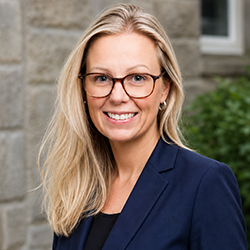 As a new Killam Chair, Dr. Sarah Moore will advance research focused on improving the health and well-being of children with disabilities and their families through play, physical activity, and inclusive mobility.
An associate professor in the School of Health and Human Performance and cross-appointed in the Department of Pediatrics, Dr. Moore leads the ParaPLAY Hub, a research program developed in partnership with children, youth, and families with lived experience. Her work centres on three areas: creating more opportunities for accessible play and physical activity, supporting independent mobility for children who use wheelchairs and other mobility devices, and ensuring the perspectives of children with disabilities help shape research and practice.
Dr. Moore will continue examining the barriers that can limit participation in play, sport, and physical activity and study the benefits of active participation for children with developmental, physical, and sensory disabilities. Working alongside families, health professionals, and community organizations, her research aims to inform programs, practices, and policies that support more inclusive and equitable experiences for children and youth.
Dr. Gurpreet Singh Selopal, Faculty of Agriculture
Early Career Researcher聽
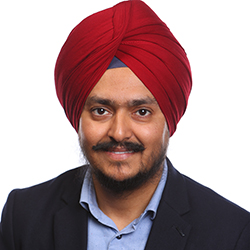 Dr. Gurpreet Selopal鈥檚 innovative greenhouse systems capture solar radiation, fine-tuning the light spectrum for better plant growth while converting unused photons into electrical power.
An assistant professor in the Faculty of Agriculture, Dr. Selopal leads the Sustainable Nanoengineering Lab. His research program focuses on developing multifunctional low-dimensional quantum materials, establishing structure鈥損roperty relationships, and engineering them to advance clean energy conversion and storage, sustainable agriculture and environmental remediation technologies in a reliable, cost-effective and scalable manner.
In collaboration with farmers and industry partners, he and his team are developing nanoengineered fertilizers derived from agricultural and marine waste to boost crop production sustainably while reducing GHG emissions.
He envisions farms not only as food producers but as energy and resource hubs. By capturing nitrous oxide emissions from agricultural waste and converting them into ammonia fertilizer, the systems close the nitrogen loop-simultaneously addressing climate change and food production.
Alongside these agricultural advancements, Dr. Selopal鈥檚 work also addresses clean energy and clean water. Through advanced interfacial nanoengineering, he has designed quantum-material-based systems capable of producing green hydrogen while simultaneously treating wastewater using sunlight. His ambition is to achieve over 20 per cent solar-to-hydrogen efficiency and reduce production costs below $2 per kilogram.聽
Learn more about 海角社区app's Killam legacy
- The Killam Trusts at 海角社区app
- Celebrating Dal's Killam scholars (Dal News, December 2025)
- Killam fellowship positions Dal prof Kimberley Hall to pursue made鈥慽n鈥慍anada quantum solutions (Dal News, March 2026)