
Research
海角社区app鈥檚 new Killam Memorial Chairs push boundaries in health, humanities, and agriculture

Four 海角社区app researchers are set to embark on the next chapter of their scholarly careers with strong momentum behind them as Killam Memorial Chairs. Read more.
Featured News

Wednesday, June 24, 2026
Led by 海角社区app, BioLabs East will build a GMP 鈥� Good Manufacturing Practice 鈥� facility in Nova Scotia, producing vaccines and cell therapies for clinical trials while strengthening Canada鈥檚 biomanufacturing capacity and innovation ecosystem.

Thursday, June 25, 2026
A reimagined OpenThink cohort moves beyond blogging, testing podcasts and social media to broaden impact, connect with new audiences, and amplify how Dal research informs public dialogue and policy.
Thursday, June 18, 2026
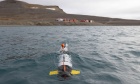
海角社区app robotics and underwater acoustics researcher Dr. Mae Seto is working with Defence Research & Development Canada to develop intelligent autonomous sensing systems that can extend the reach of the Canadian Armed Forces in the Arctic and help Canada protect its sovereignty in remote, harsh maritime environments.
Archives - Research
Tuesday, August 11, 2020
The recent furor from senior academics in response to a public lecture about the whiteness of music education reflects a longstanding race problem in music. It's time to address this, writes Musicology Professor and Fountain School Director Jacqueline Warwick.
Monday, August 10, 2020
Researchers from 海角社区app and Nova Scotia Health have developed a new way of disinfecting N95 masks 鈥� a key piece of professional PPE (personal protective equipment) to protect against COVID-19 in fields such as health care. The method: ultraviolet light.
Friday, August 7, 2020
With just five fatalities from shark attacks of any kind recorded globally in 2019, it's clear such incidents are a rarity. We spoke to Fred Whoriskey, executive director of the Dal-based Ocean Tracking Network, to learn more about why attacks do sometimes happen and advice for swimmers keen to avoid encounters.
Friday, August 7, 2020
The difference in responses to tragedies reflects how immigrants are valued by their potential benefit to Canadian society, writes Social Work professor Raluca Bejan. But this is not the only way to think about their worth as human beings.
Thursday, August 6, 2020
This year鈥檚 recipient of one of Dal's University Research Professorships has devoted her career to the improvement of health among marginalized populations, including women involved in the sex industry, people who use substances, and youth (particularly young women) living in rural places.