

Thinking about the consequences of climate change 鈥� whether experienced through sweltering heat waves, unseasonable storms, or a rapidly warming Arctic 鈥� can be overwhelming, particularly for young people projecting the future state of the world they are growing up in.
There鈥檚 a term for this feeling: eco-anxiety.
Three years ago, Dr. Amy Mui, University Teaching Fellow in the Department of Earth and Environmental Sciences, and a few 海角社区app University colleagues founded in response to what their students were going through.
鈥淓co-anxiety is growing, and it鈥檚 most damaging to young, vulnerable people,鈥� says Dr. Mui. 鈥淲e wanted to target university students that are feeling this level of doom about the future of our planet and switch the narrative to hope.鈥�
Eco-anxiety is growing, and it鈥檚 most damaging to young, vulnerable people.
The organization鈥檚 motto is 鈥減lanetary change in small, hopeful doses,.鈥� EcoHope鈥檚 activities, from field trips and speaker events to campus gardening, are intended to build community and make members feel like their actions can make a difference.
During the spring, summer, and early fall, EcoHope鈥檚 focus is on gardening and biodiversity support, increasing the presence of native plants on campus by growing pollinator gardens, such as the one found outside the Life Sciences Centre (LSC) Biology Tower that supports experiential learning and horticultural skill-building opportunities for students.
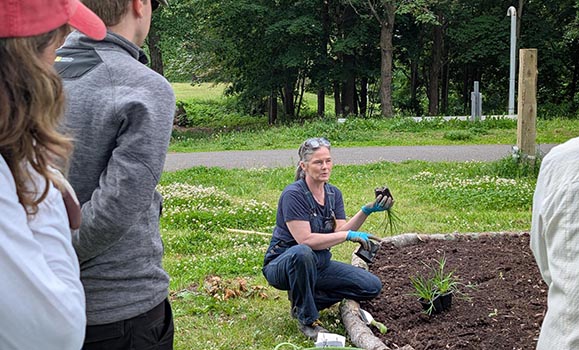
Tracy Jessen, naturalization coordinator from Halifax Parks and Recreation, gives a tutorial on how to plant seedlings in the pollinator garden.
Thanks to connections with Halifax Parks & Recreation, EcoHope recently expanded its scope off-campus, planting a pollinator garden at Flinn Park in the city鈥檚 west end. On a weekend in late June, faculty and student volunteers, along with local community members, came together to plant more than 50 seedlings from 20 native plant species, all from a surplus grown over the winter in Dal鈥檚 greenhouse.
鈥淚t was a great shared event,鈥� says Dr. Mui, adding that native plants are ideal for community spaces since they have evolved to live in our climate, so the care and maintenance required is less than many non-native cultivated species.
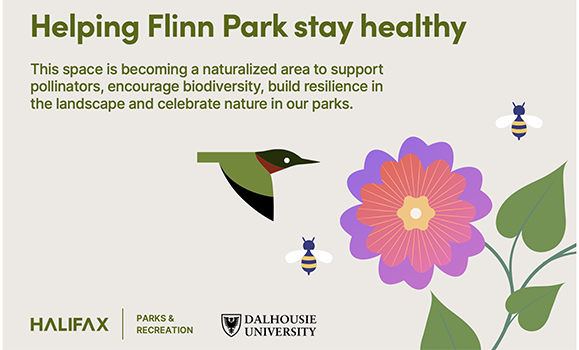
A sign displayed in Flinn Park.
The garden鈥檚 plant species were also carefully chosen to support biodiversity, meaning that a range of pollinators and wildlife benefit from their presence.
For example, late-flowering coneflowers hold onto their seeds throughout the winter and are a food source for birds, while fellow late-blooming milkweed plants fuel monarch butterflies migrating south for the winter.
鈥淧art of the benefit of native plants is learning more about how the ecosystem functions and educating the public so people can enjoy the beaty of native flowers and also understand the benefit they are providing,鈥� says Dr. Mui.
Boulevard gardening
EcoHope is exploring a pilot project that would support Halifax residents interested in , where the strip of vegetation between the sidewalk and the road can be used to grow native plants that support biodiversity.
鈥淢any people don鈥檛 know they can plant on their boulevards,鈥� says Dr. Mui, so raising awareness is one element, as is providing residents a supply of Dal-grown native plants, especially heartier ones that can withstand the salt from wintery sidewalks before emerging in the spring and flowering in the summer.
The more stepping stones we have for pollinators, the better.
Making life easier for pollinators that fly long distances and play a vital role in our ecosystem is an example of the small but meaningful actions EcoHope encourages.
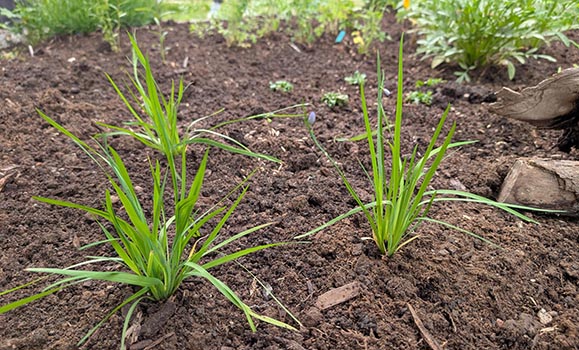
Heart-leaved Aster, above,听is a native perennial wildflower that blooms in late August to October providing critical late season food for pollinators when other flowers have faded.
鈥淭he more stepping stones we have for pollinators, the better," says Dr. Mui.
EcoHope welcomes new volunteers and community members looking to get involved. Learn more by or contacting ecohope@dal.ca